
Coffee Station Organizer Price and Value Guide
A coffee station organizer offers good value when its footprint, usable capacity, material or finish, access layout, and cleaning burden match the way the station is actually used. Pay more only when an added feature solves a recurring need—such as sturdier construction for frequent or shared use, adjustable storage for changing supplies, or more usable capacity without blocking access; for light, predictable setups, a simpler organizer can be the better-value choice.

Value-fit decision assistant
Choose the conditions that describe your coffee station. The result identifies the organizer profile and attributes most likely to justify its price; it does not estimate a live marketplace price.
How to read the result
Use the profile as a feature filter. A higher price is useful only when the added construction, storage, or maintenance advantage addresses one of your selected conditions.
The guide below compares relative price tiers rather than fixed price bands because marketplace prices change. It evaluates coffee station organizers through stable decision attributes: fit, usable capacity, access, material and finish, cleanability, durability, and feature usefulness.
Coffee Station Organizer Price Ranges and What Changes Between Them
Coffee station organizer price ranges are most useful as relative tiers—budget, mid-range, and higher-end—rather than fixed currency bands. The tier should reflect the combination of build, usable storage, access design, finish, and durability, not a price label by itself.

Because current marketplace prices vary by seller, listing, size, and timing, these tiers describe feature and construction position, not a universal AUD threshold. Budget models usually concentrate on essential storage; mid-range models tend to add stronger construction or more usable organisation; higher-end models are only better value when their extra structure is actually used.
Price differences are also influenced by organizer styles that affect price. Drawer-based, tiered, tray-style, and modular layouts use different amounts of material and construction complexity, so layout utility can matter more than decorative finish.
A simpler organizer can be sufficient when the daily supply set is small and predictable. If a few pods, cups, and condiments fit without crowding or awkward access, extra compartments or heavier construction may add cost without improving the routine.
Use the table as a value-position guide. Move to a higher tier only when the additional attributes solve a real need in your setup.
| Relative tier | Typical build pattern | Storage pattern | Best-fit condition | Value warning |
|---|---|---|---|---|
| Budget | Simple plastic, bamboo, wood, wire, or mixed construction | Essential compartments or open storage | Light personal use with a small, predictable supply set | Low price loses value if the unit is unstable, too small, or awkward to clean |
| Mid-range | More substantial materials, smoother hardware, or better-finished mixed construction | Moderate capacity with more deliberate separation | Regular home use, mixed supplies, or a need for better access | Extra compartments add little if they remain empty or obstruct access |
| Higher-end | Heavier-duty construction, refined finishes, or more complex multi-part layouts | Higher usable capacity, modularity, or multiple access zones | Frequent/shared use or complex storage needs that repeatedly use those features | Higher price is not better value when durability or feature depth is unnecessary |
Coffee Station Organizer Material Value Trade-Offs
Material changes value through surface behaviour, structural rigidity, moisture response, cleaning effort, and finish durability. Bamboo, wood, acrylic, plastic, and metal can all be suitable; the better choice is the one whose surface and construction match the station environment.

A material should be judged together with its finish and construction. Smooth, accessible surfaces generally reduce routine wiping effort, while unsealed natural materials, damaged coatings, deep seams, or scratch-prone clear surfaces can increase visible wear or maintenance.
Bamboo and wood can provide stable, warm-looking storage when their finish is intact; acrylic offers high visibility but can show scratches; plastic is often light and easy to wipe but varies greatly by thickness and moulding; and well-built, properly coated metal can provide strong stability while damaged coatings can increase corrosion risk in wet conditions.
| Material | Key value attribute | Cleaning / wear consideration | Best-fit condition |
|---|---|---|---|
| Bamboo | Light, natural-looking structure | Finish condition matters; avoid prolonged wetting and wipe spills promptly | Dry to moderately used counters where appearance and simple storage matter |
| Wood | Rigid structure with a warm, substantial feel | Sealing and joints influence stain and moisture resistance | Structured home stations where the surface can be kept reasonably dry |
| Acrylic | Clear visibility and rigid compartment walls | Easy to wipe when smooth, but scratches and scuffs can remain visible | Setups where visual inventory and quick identification are priorities |
| Plastic | Low weight and flexible shapes | Usually easy to wipe; rigidity and long-term wear depend on construction | Practical everyday storage where low handling weight matters |
| Metal | Potential for high structural stability | Coating or finish integrity matters in humid or spill-prone areas | Frequent or shared use where stability and repeated handling are priorities |
Bamboo and Wood Organizer Value
Bamboo and wood organizer value depends less on the material name alone than on finish quality, moisture exposure, joint construction, and cleaning habits.

Use the surface condition and environment together: an intact, smooth finish can reduce staining and make wiping easier, while worn or unsealed areas are more vulnerable to moisture marks and residue.
Bamboo / wood condition check
| Condition | Value signal | Practical implication |
|---|---|---|
| Dry or light-spill counter | Intact sealed finish and stable joints | Natural materials can offer good value with routine wiping and prompt spill cleanup |
| Frequent spills or humidity | Smooth, well-protected surface with easy access for drying | Surface protection becomes a priority; poor sealing can outweigh the visual benefit |
| Drawer-based design | Aligned construction and smooth movement | Check that moisture or swelling does not interfere with repeated opening and closing |
Acrylic and Plastic Organizer Value
Acrylic and plastic organizers are usually chosen for visibility, low handling weight, easy-access compartments, and wipeable surfaces, but value still depends on thickness, rigidity, layout, and how often the unit is moved or cleaned.

Acrylic vs plastic: what changes the value
| Attribute | Acrylic | Plastic |
|---|---|---|
| Visibility | Often clear, making stock levels easy to see | Can be clear, translucent, or opaque depending on the design |
| Feel and rigidity | Typically rigid; thickness affects stiffness and perceived quality | Ranges from flexible to rigid depending on material and construction |
| Wear pattern | Scratches and scuffs can be conspicuous on clear surfaces | Wear varies; textured or opaque finishes may hide marks differently |
| Best-fit use | When visual inventory and a clean display matter | When light weight, practical shapes, or simple everyday storage matter |
Metal Organizer Value
Metal organizer value depends on frame rigidity, base stability, coating or finish integrity, and the way the load is supported. Metal itself does not guarantee durability; construction quality and moisture exposure still matter.
A sound frame can handle repeated access with little flex, while bent joints, narrow bases, or damaged coatings reduce that advantage. In humid or spill-prone areas, exposed metal at scratches or worn edges can be more vulnerable to corrosion.
Rust resistance is closely tied to coating integrity, since exposed or worn surfaces may gradually show corrosion in humid or spill-prone environments. Heavier builds can improve stability on busy counters, while lighter designs may feel less steady depending on base structure and load distribution.
- Durability cue: coated metal frames can support repeated shared use when surface protection remains intact
- Moisture caution: prolonged exposure to water or steam may increase wear risk in unsealed or damaged coatings
- Stability factor: weight and mesh density influence balance during frequent handling on active counters
For a high-use or shared station, metal creates better value when stability under repeated handling matters and the finish is appropriate for the cleaning environment. A lighter frame can still work when loads are small and the base remains stable.
This chart illustrates how coating quality, weight, and mesh density affect metal organizer durability and stability, and when they are recommended for high-use setups.

Storage Features That Can Justify a Higher Price
Storage features justify a higher price only when they improve access, reduce clutter, or adapt the organizer to the actual supply mix. More compartments are not inherently more valuable; unused structure can reduce usable space.
Drawers, dividers, removable compartments, tiered layouts, cup and lid zones, pod storage, and condiment sections each function as storage attributes within an Entity-Attribute-Value structure, where the organizer is evaluated by how well these attributes reduce search time and maintain order during daily use. Their impact depends on how closely they align with actual supply variety and frequency of access.
Evaluation of whether a storage feature adds real value depends on supply needs, counter space, and routine usage patterns, and it should be considered alongside capacity features worth comparing when judging overall usefulness. Features that exceed daily requirements may not improve function, while well-matched features can reduce clutter and improve access efficiency.
Usually useful
Drawers, dividers, pod zones, or dedicated supply areas that match frequently used items and shorten retrieval time.
Conditionally useful
Tiering, removable parts, or modular sections when vertical space or reconfiguration is genuinely needed.
Potentially wasteful
Oversized compartments, excessive segmentation, or extra tiers that increase footprint or cleaning effort without improving access.
This framework helps identify when a storage feature contributes to practical value versus when it mainly increases structure without improving everyday usability.
This chart classifies storage features into useful, neutral, and potentially wasteful categories based on their impact on daily access and clutter reduction.

Drawers, Dividers, and Removable Compartments
Drawers, dividers, and removable compartments create value by changing access, visibility, separation, and reconfiguration. The useful mechanism is the one that matches the size and movement of the supplies stored inside it.
These components add value only when they improve how quickly items can be reached, how clearly they are separated, and how easily the storage space can be cleaned based on what is actually stored.
| Storage mechanism | Value when | Trade-off to check |
|---|---|---|
| Drawer | It removes surface clutter while keeping frequently used items easy to reach | Deep drawers can hide small items; check usable depth and visibility |
| Divider | Small supplies need stable separation and quick identification | Too many fixed partitions can waste space when item sizes change |
| Removable compartment | The supply mix changes and the layout needs to be reconfigured | Extra pieces can add cleaning and reset steps if flexibility is rarely used |
A shallow drawer can solve clutter by grouping frequently used packets in one accessible place, while a deep drawer may hide small items too far back, making them less visible and slower to retrieve during routine use.
The value of dividers and removable compartments depends on whether the stored items genuinely need separation or frequent rearrangement, since unused partitioning can reduce usable space without improving daily efficiency.
This chart shows how drawers, dividers, and removable compartments add value based on access, visibility, and storage control, and contrasts fixed vs adjustable configurations.

Large Capacity Without Wasted Counter Space
Large capacity creates value when it increases usable storage per unit of counter space without making items harder to reach. Physical size alone is not a capacity advantage.
High-capacity designs can improve storage balance when they distribute cups, pods, lids, and condiments across vertical or segmented zones. However, capacity only remains useful when items stay reachable and do not compete for limited access paths within the same layout.
The following checklist helps evaluate whether capacity is being used efficiently rather than wasted:
- Footprint: space used on the counter compared to usable storage gain
- Height: whether vertical space improves storage without blocking access
- Compartment count: alignment between storage divisions and actual supply variety
- Restocking frequency: whether capacity reduces or adds unnecessary refilling effort
- Supply variety: compatibility with cups, pods, lids, and condiments without overlap
- Access path: ease of reaching items without shifting other stored components
Cleaning Burden and Durability Over Time
Long-term value combines cleaning burden with durability: an organizer is less valuable if its structure survives well but repeatedly traps residue, or if it is easy to wipe but becomes unstable under normal use.
Use these signals to distinguish lower-maintenance construction from features that may add recurring cleaning or reset effort:
| Attribute | Lower-burden signal | Higher-burden warning |
|---|---|---|
| Removable parts | Parts lift out easily and return to position without complicated reset steps | Many small pieces require repeated disassembly, drying, and reassembly |
| Surface texture and gaps | Smooth, reachable surfaces can be wiped directly | Deep recesses, tight corners, mesh, or seams trap dust and residue |
| Spill / moisture exposure | Finish tolerates routine wiping and dries readily | Unprotected edges, damaged coatings, or moisture-sensitive surfaces stay wet or mark easily |
| Coating and joints | Finish remains intact and joints stay stable under repeated handling | Peeling, swelling, loosening, bending, or corrosion reduces long-term utility |
| Shared use | Open access supports quick restocking and reset | Complex layouts make frequent multi-user cleaning or resetting slower |
Some designs may appear valuable at purchase due to structured compartments or enclosed layouts, but they can become less practical if they are difficult to wipe, dry, or reset during routine use. This assessment aligns with maintenance and cleaning burden when evaluating long-term upkeep impact.
Features such as deep recesses or tightly segmented zones may increase organisation initially but can also add recurring cleaning effort depending on how the station is used.
This chart categorises the key evaluation criteria for cleaning burden and durability over time, helping assess long-term practicality of coffee station organizers.

Budget vs Higher-Priced Coffee Station Organizer Decisions
The choice between a budget and higher-priced organizer should be based on use frequency, supply variety, stability needs, cleaning tolerance, and whether advanced storage features will be used repeatedly. Price is a consequence of the feature set, not a value score.
The comparison between budget and higher-priced organizers focuses on how storage fit, maintenance effort, and feature depth change under different usage conditions rather than price alone. The same price level can perform differently depending on whether the setup is minimal, shared, or frequently restocked.
| Decision factor | Budget profile | Higher-feature profile |
|---|---|---|
| Frequency of use | Strong fit for light or predictable personal use | More likely to justify extra construction when access is frequent or shared |
| Supply quantity / variety | Works when a small set fits without crowding | Useful when larger or changing supplies need deliberate zones |
| Counter space | Compact simplicity can be an advantage | Worthwhile only if added tiers or capacity use the footprint efficiently |
| Durability need | Basic construction can be sufficient under gentle handling | Stronger frames, joints, or hardware matter when repeated handling creates stress |
| Cleaning tolerance | Fewer components can mean faster routine wiping | Extra structure should be easy enough to clean to justify its added complexity |
| Feature value | Essential storage only | Modularity, drawers, or segmentation only when those features solve recurring problems |
Decision clarity improves when the choice is aligned with real use conditions rather than price level alone, and this is further explained in how to choose a coffee station organizer which helps connect setup needs with practical selection criteria.
In practice, a higher-priced organizer can be reasonable when frequent use, multiple users, or larger supply variety requires more structured storage, while a budget option may remain sufficient when the setup is minimal, less frequently accessed, and easier to maintain without additional features.
When an Affordable Organizer Is Enough
An affordable organizer is enough when it fits the available counter area, holds the supplies used each day, stays stable in normal handling, and can be cleaned without extra friction.
This condition depends on simple usage needs where storage demand, counter size, and handling frequency stay limited and predictable. In these cases, lower-cost organizers can meet functional requirements without reducing day-to-day usability.
An affordable organizer is typically sufficient when:
- Simple supply set: only basic items such as pods, cups, or condiments need to be stored
- Light usage: the coffee station is not accessed heavily throughout the day
- Compact layout: limited counter space requires a small footprint solution
- Basic structure: no advanced compartment system or modular adjustment is required
- Simple materials: standard finishes are acceptable for the environment
- Easy cleaning: surfaces can be wiped quickly without disassembly
An affordable option may become less effective when it is too small for actual supply needs, unstable under regular handling, or difficult to clean due to tight compartments or poor surface access, which can increase daily friction despite the lower initial cost.
When a Higher Price Creates Better Value
A higher price creates better value only when the upgrade reduces recurring friction, improves useful capacity, or provides construction that matches heavier use.
This condition depends on whether the upgrade solves real usage needs rather than adding unused structural complexity. Value increases only when features align with actual demand such as frequent access, shared use, or larger supply variety.
A higher-priced organizer is typically justified when:
- Sturdier materials: support repeated handling and reduce instability over time
- Smoother drawers or access systems: improve speed and reduce effort during frequent use
- Removable dividers: allow flexible layout adjustment based on changing supplies
- Larger usable capacity: better fits higher volume or more varied items
- Better surface finish: helps maintain appearance under regular wear conditions
- Easier cleaning design: reduces buildup and simplifies routine maintenance
Higher price does not automatically indicate better value when these features are not needed in the setup. In such cases, added structure may remain unused and provide limited practical benefit.
In shared coffee areas or high-use counters, higher-priced organizers can create better value because durability and faster reset cycles reduce daily interruptions when multiple users rely on the same station.
Coffee Station Organizer Value Checks Before Buying
Before buying, verify that price is justified by fit, usable capacity, access, material or finish suitability, cleanability, and expected handling intensity. Decorative or extra features should not compensate for a mismatch in these core attributes.
A final value check works as a quick decision filter before any partner-offer click by organising key criteria into a structured review of real usage conditions.
| Check | Verify | Reject or reconsider when |
|---|---|---|
| Counter fit | Footprint and height fit the intended area without blocking workflow, cabinets, machine access, or sockets | The organizer only fits by obstructing a frequently used path or appliance |
| Usable capacity | Daily cups, pods, lids, condiments, or tools fit with room for practical access | Capacity exists on paper but items are hidden, crowded, or difficult to retrieve |
| Storage mechanism | Drawers, dividers, tiers, or removable parts solve a real separation or access need | Added compartments stay unused or make cleaning and restocking slower |
| Material / finish | The surface suits likely moisture, spills, handling, and visual wear | Finish protection is poor for the environment or difficult to maintain |
| Cleanability | Frequently soiled areas are reachable, wipeable, and easy to dry | Deep recesses or many small parts create disproportionate maintenance |
| Durability fit | Frame, joints, base, and moving parts match personal versus frequent/shared use | The structure flexes, rocks, binds, or relies on delicate parts for heavy use |
| Upgrade reason | Each paid-for feature reduces clutter, access time, maintenance, or instability | The reason to upgrade is mainly appearance or unused feature count |
Together, these checks close the key value relationships: the organizer is the entity; fit, capacity, structure, material, access, cleanability, and durability are the attributes; and the useful values are the conditions that show whether each attribute matches the intended setup.
The most reliable decision rule is: do not accept a major mismatch in fit, usable capacity, or cleanability just because another feature looks premium. Choose the simplest profile that meets the station's recurring needs, then treat extra features as upgrades only when they solve a specific problem.
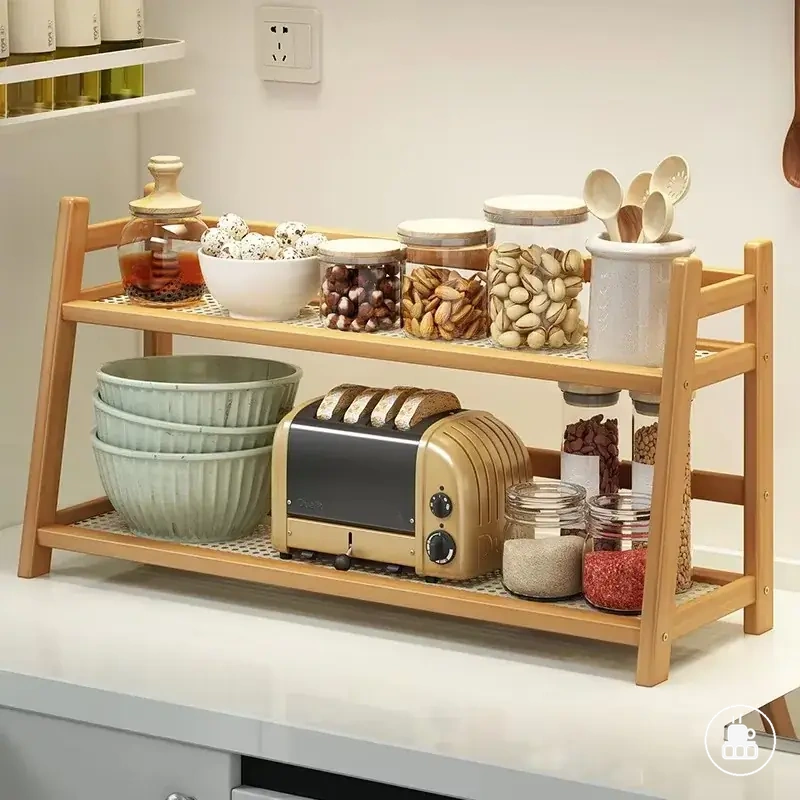
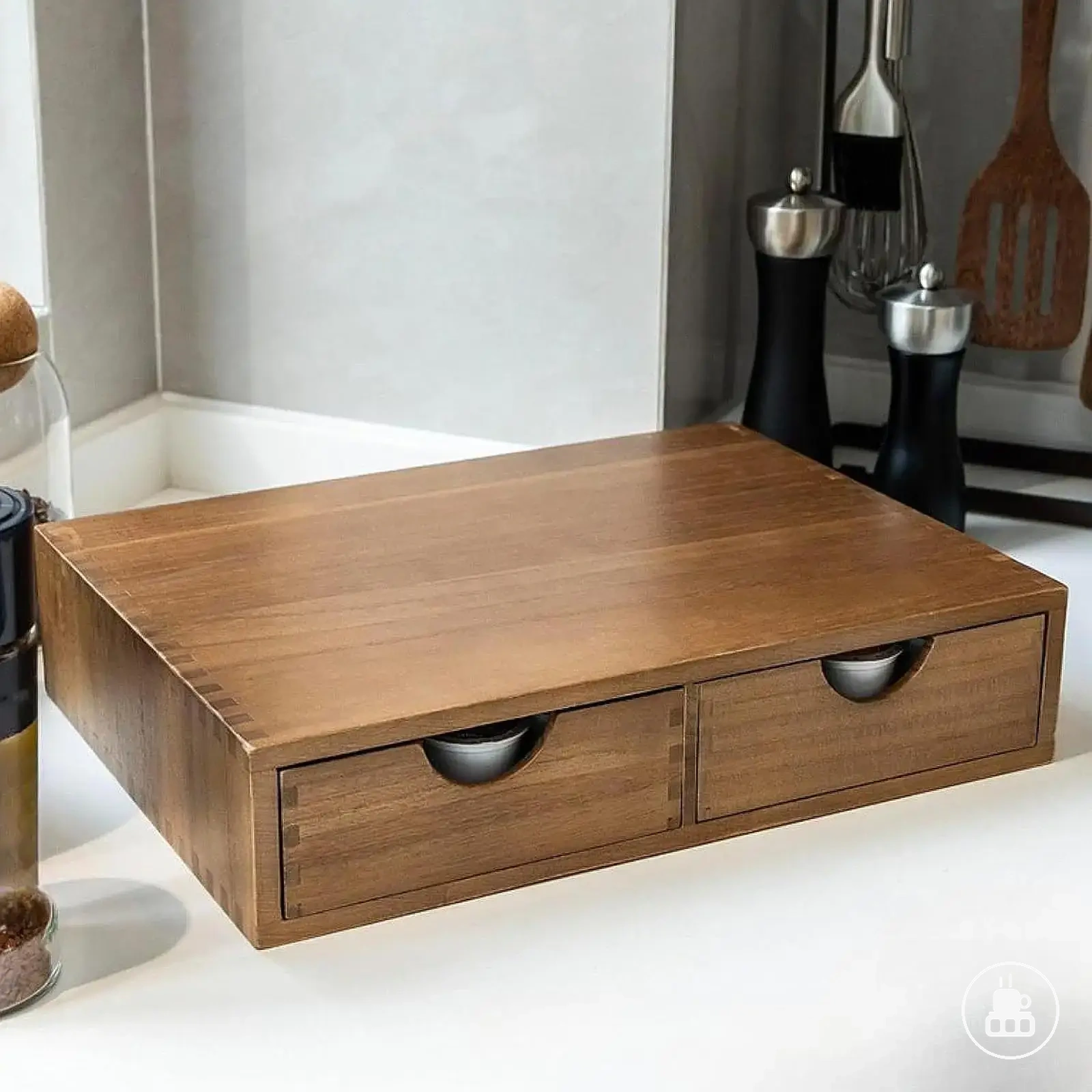
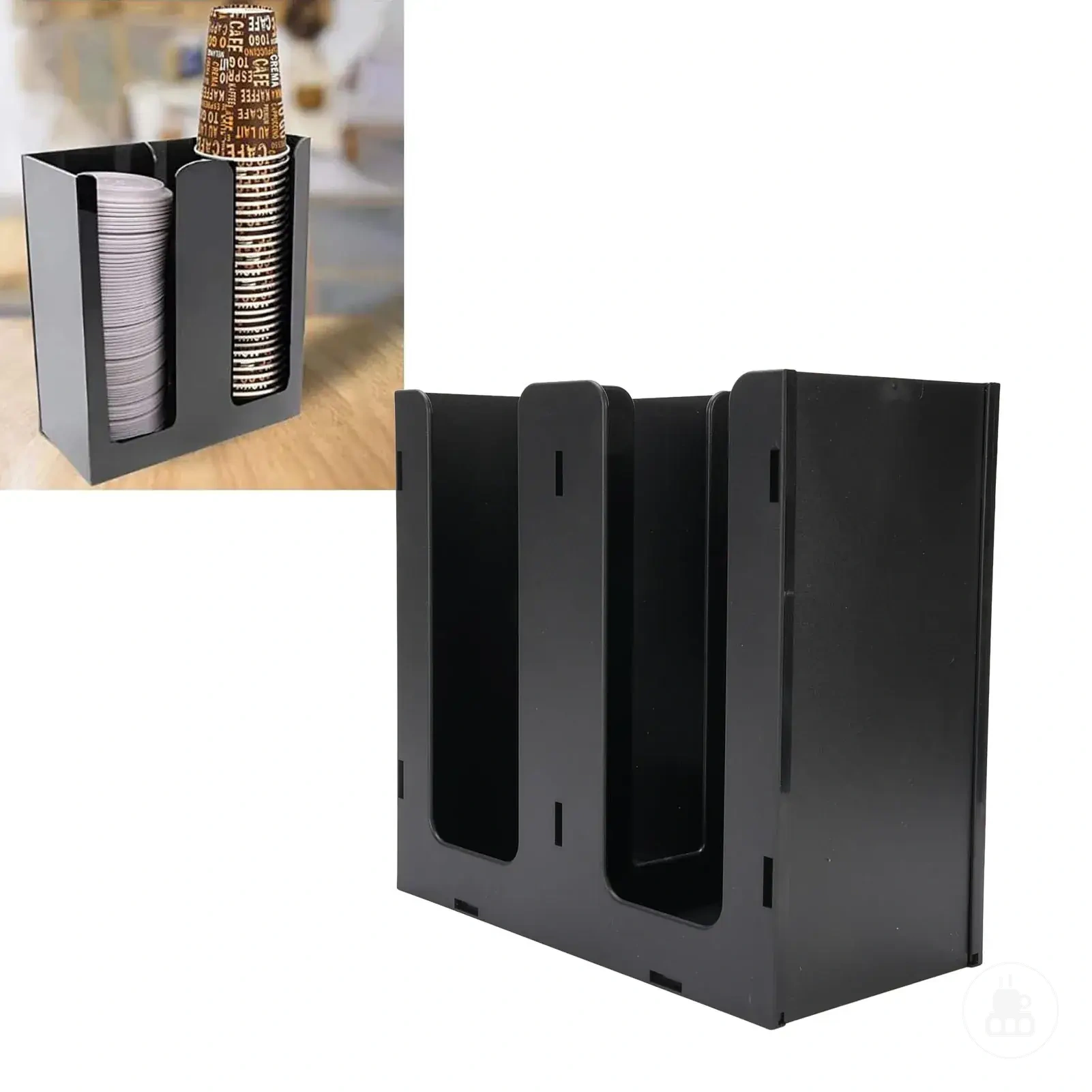
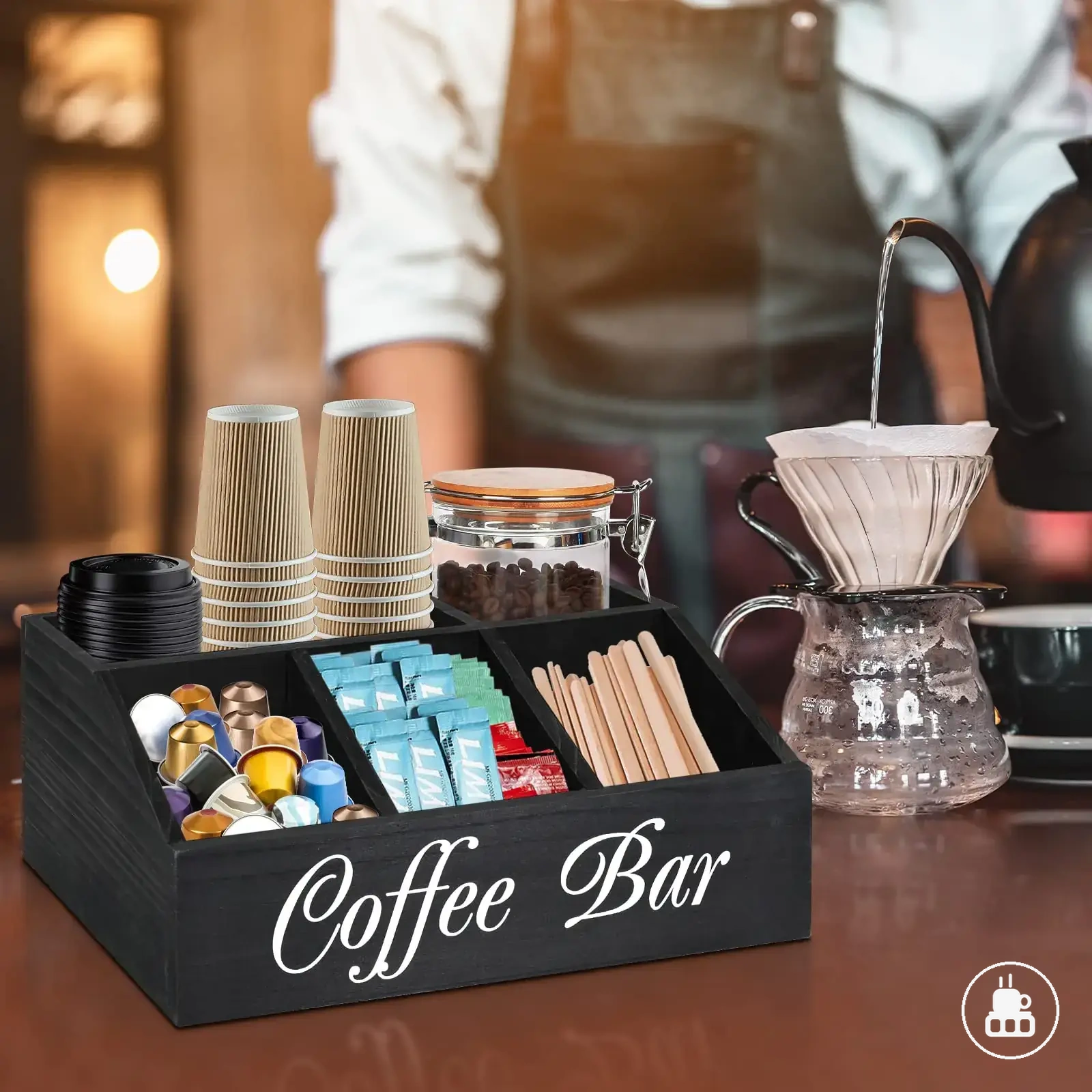
The product examples below use existing partner destinations to illustrate different storage formats. This site provides comparison information rather than selling or fulfilling the products; verify current dimensions, price, availability, shipping, and seller terms at the destination before buying.

This chart shows the key value checks and decision rule for evaluating a coffee station organizer purchase.
