
Coffee station organizer compatibility for pods, cups, and condiments
A compatible coffee station organizer should match the physical size, refill rate, and access needs of its pods, cups, lids, and condiments. Prioritise compartment dimensions, frequently used item access, and countertop clearance; choose adjustable or separate storage zones when supply shapes or turnover rates conflict.

Compatibility decision assistant
Choose the conditions that best describe the station. The result prioritises organizer layout features from this guide; it does not use live marketplace data or guarantee fit.
Best-fit profile:
Before buying, confirm the organizer's actual internal width, depth, and height against your own pods, cup and lid stacks, refill path, and machine clearance.
- Pods and packets usually need visible, reachable compartments rather than deep undivided bins.
- Cups and lids need opening width and vertical clearance that match the actual stack dimensions.
- Mixed or changing supplies benefit from adjustable dividers or separate zones when shapes and refill rates conflict.
A coffee station organizer is a structured storage unit that keeps pods, cups, lids, stirrers, and condiment packets in dedicated or shared zones for quicker identification, access, and restocking. The coffee station organizers category includes fixed compartments, adjustable dividers, drawers, tiers, and upright holders; the best layout depends on the supply mix rather than on compartment count alone.
Assess compatibility as a system: cup and lid stacks need adequate width and vertical clearance, while pods and packets need openings that keep them visible and easy to retrieve. A layout that suits pods can still fail if cup stacks block access or if small packets disappear in deep compartments.
When a mismatch appears, redistribute space around use frequency and item shape before replacing the whole unit. Fast-moving or bulky supplies should receive more usable space and easier reach, while lower-turnover packets can occupy smaller but still visible zones.
Supply scope for pod, cup, lid, and condiment storage
Supply scope describes the coffee supplies a single organizer is expected to hold together. For this page, the core groups are pods or capsules, disposable cups, cup lids, stirrers, and condiment packets; each group imposes a different requirement on compartment size, visibility, and refill access.

The functional boundary is the organizer itself, not the entire coffee station. Pods benefit from visible containment, cup stacks need stable width and height clearance, lids need an opening that fits their outer diameter, and small packets are easier to manage in shallow separated zones. Equipment, brewing accessories, and other station items belong outside this storage scope unless the organizer is specifically designed for them.
Use the following supply groups to decide which storage zones the organizer must provide.
Core storage scope
- Pods or capsules: visible containment with an opening or drawer clearance suited to the pod format.
- Disposable cups: stable stacking support with enough width and vertical clearance for the actual cup stack.
- Cup lids: a holder opening suited to the largest lid diameter in use.
- Stirrers: a narrow, shallow zone that leaves the ends easy to grasp.
- Sugar packets: shallow visible grouping for quick selection.
- Creamer packets: a separated zone that remains reachable during restocking.
- Sweetener packets: compact visible separation so similar packets do not become mixed or buried.
Compatibility factors for mixed coffee station supplies
Compatibility depends on whether each supply type has a stable, reachable, and appropriately sized storage zone. The practical fit test is not whether every item can be placed inside, but whether pods, cups, lids, stirrers, and packets remain easy to identify, remove, and refill without one group blocking another.

Because these supplies have different shapes, the relevant fit attributes differ by group. The table closes the main entity–attribute–value relationships used to judge compatibility.
| Supply type | Fit attribute | Useful value or condition | Practical decision |
|---|---|---|---|
| Pods or capsules | Depth, opening, and visibility | Contained without being buried; opening permits removal without forcing | Choose a pod zone that keeps the active format visible and easy to refill |
| Disposable cups | Holder width and vertical clearance | Stack remains upright and clears shelves, cabinets, or machine parts above it | Size the holder to the actual cup rim and stack height |
| Cup lids | Opening width and access | Opening accommodates the largest lid diameter and leaves finger access | Avoid holders that pinch lids or let the stack spread sideways |
| Stirrers | Compartment depth | Shallow enough that the stirrer ends remain easy to grasp | Use a narrow, low-profile zone rather than a deep bin |
| Sugar, sweetener, and creamer packets | Depth and separation | Front-access, shallow, and separated enough to keep packet types visible | Prevent small packets from being buried behind larger supplies |
| Mixed supplies | Zone allocation | More usable space for bulky or high-turnover items; separate zones for conflicting shapes | Balance capacity by actual use and item shape instead of equal compartment size |
The table shows why a single dimension cannot define compatibility. A pod compartment can work well while cup or lid storage still fails, so evaluate each supply group against the attribute that controls its fit and then check whether the groups can share the available space without blocking one another.
When space is limited, place the highest-turnover supplies in the easiest-to-reach zones and separate tall stacks from shallow packet storage. If those requirements cannot coexist without repeated overflow, hidden items, or blocked access, separate storage zones are the stronger fit.
Pod format and capsule storage fit
Pod and capsule storage fit depends on the relationship between the pod format and the organizer's opening width, internal depth, drawer clearance, and storage orientation. Pods stored loose in an open bin behave differently from capsules held in fitted channels or drawers, so the active pod format must be checked against the actual storage geometry.

| Fit check | Compatible condition | Mismatch signal |
|---|---|---|
| Opening width | Each pod or capsule passes through the opening without force | Catching, jamming, or damaged packaging |
| Depth and drawer clearance | Pods stay reachable and any drawer closes without contact | Hidden pods, compression, or drawer interference |
| Orientation and format | One format remains stable, or dividers can be adjusted to the formats in use | Mixed sizes shift, tip, or stack unpredictably |
| Refill path | Front or top access remains clear when the compartment is normally filled | Frequent overflow or the need to remove other supplies to refill |
Disposable cup and lid size fit
Disposable cup and lid fit is controlled mainly by cup rim diameter, lid outer diameter, stack height, and vertical clearance. The holder must keep each stack stable while leaving enough room to lift or pull an item without jamming.

Disposable cup and lid size fit depends on cup stack diameter, lid stack diameter, and vertical clearance, and the checklist below verifies how these factors affect tipping, jamming, or wasted-space risk.
Cup and lid fit checklist
- Cup opening: wider than the cup stack at its widest rim so cups slide in and out without binding.
- Lid opening: accommodates the largest lid diameter while keeping the stack contained.
- Stack height: remains below the available vertical clearance, including nearby shelves or machine parts.
- Stack stability: the compartment supports the stack without excessive side-to-side movement.
- Removal clearance: leaves enough hand space to take one cup or lid without disturbing the rest.
- Refill path: can be restocked without moving the machine or other frequently used supplies.
If the holder is too narrow, the stack can bind or jam; if it is much wider than the stack, cups or lids can lean and waste usable space. Check the widest rim or lid diameter and the normal filled stack height against the organizer rather than relying on nominal drink size alone.
Stirrer, sugar, creamer, and packet access fit
Stirrer and packet access depends on shallow compartment depth, hand access, and visible separation. Because stirrers are long and narrow while sugar, sweetener, and creamer packets are small and flat, they should not be evaluated with the same fit rule used for cups or pods.
When storage is too deep or not clearly separated, stirrers can become harder to grab while small packets may get buried behind others, reducing hand access efficiency. In shared-use setups, this can slow refill timing and increase hesitation during selection.
Access checks for stirrers and packets
- Stirrers: keep enough length exposed for an easy grip; avoid deep bins that hide the ends.
- Sugar packets: use visible grouping so the front row can be identified without digging.
- Creamer packets: keep the compartment shallow enough for the rear packets to remain reachable.
- Sweetener packets: separate types when similar packaging would otherwise slow selection.
- Refill access: leave a clear top or front path so packets can be replenished without emptying the compartment.
A mismatch is visible when stirrers sink below an easy grip line, packet types become mixed, or rear packets cannot be reached without moving the front ones. In those cases, reduce effective compartment depth with a divider or use a smaller dedicated zone instead of adding more packets to the same deep bin.
The chart below summarises how shallow reach and visible separation affect access, refill speed, and clutter for small coffee-station supplies.

Compartment layouts for keeping supplies separate and reachable
Compartment layout is the structural arrangement that controls how coffee station supplies are separated, seen, reached, and restocked inside a coffee station organizer. It defines how fixed compartments, adjustable dividers, drawers, tiers, and upright slots distribute space for pods, cups, lids, and packets. This arrangement directly shapes separation, visibility, reach, and restocking outcomes across mixed supplies.
When compartment layout does not match supply shape, items can become harder to access or less visible during use. Fixed compartments often provide predictable separation but may create wasted space when supply sizes vary. Adjustable dividers can improve flexibility for mixed items but may reduce efficiency if poorly configured. Drawers, tiers, and upright slots each shift how visibility and reach work, depending on whether items are hidden, stacked, or presented vertically. The comparison below shows how each layout affects access and restocking behavior.
Compartment layouts for keeping supplies separate and reachable vary in how they balance separation, visibility, reach, and restocking. The comparison below outlines how each layout performs under different use conditions.
| Layout option | What it helps store | Access strength | Watch-out |
|---|---|---|---|
| Fixed compartments | Pods, lids, uniform items | Strong separation and predictable reach | May waste space when supply sizes differ |
| Adjustable dividers | Mixed pods, packets, variable supplies | Flexible separation and adaptable reach | Can reduce efficiency if set poorly |
| Drawers | Small packets, stirrers, mixed items | Controlled access with hidden storage | Lower visibility during quick selection |
| Tiers | Cups, lids, stacked supplies | Improved vertical visibility and reach | Can limit restocking flexibility |
| Upright slots | Cups, lids, flat items | Fast reach with clear visibility | May reduce separation for smaller items |
Layout choice depends on the relationship between supply shape and access. Adjustable dividers are useful when sizes change; fixed compartments suit stable, repeatable formats; drawers reduce visible clutter; and tiers or upright holders improve presentation and direct reach. Use compartments and capacity planning to check that the chosen layout also provides enough usable volume.
More divisions do not automatically produce better organisation. The useful number of compartments is the number that separates conflicting supplies without creating unreachable gaps or wasted space.
Open caddy compartments and adjustable dividers
Open caddies maximise visibility and direct reach, while adjustable dividers control how that open space is allocated. This combination is most useful when pod, cup, lid, and packet sizes vary enough that fixed compartments would leave unused space.
Works well when
- supply sizes change over time;
- dividers lock firmly enough to hold the intended zones;
- front or top access remains open for refilling;
- visibility is more important than concealed storage.
Watch for
- loose dividers that let pods or packets migrate between zones;
- openings so wide that small items lose containment;
- tall cups blocking shorter supplies behind them;
- over-partitioning that creates narrow unused gaps.
Drawer, tiered, and upright storage layouts
Drawer layout, tiered layout, and upright storage are compartment layout variations that influence how visibility, reach, and countertop footprint behave inside a coffee station organizer. Each layout changes how cups, lids, and small supplies are presented and accessed, which affects whether items remain visible or become partially hidden during use. The way space is divided or exposed directly shapes visibility, reach, and footprint outcomes.
Drawer layout provides enclosed storage that can place items in a hidden supplies condition, reducing surface clutter but limiting immediate visibility. Tiered layout uses vertical stacking that improves visibility across layers, while upright storage presents cups or lids in a vertical position that supports direct reach. These differences affect how quickly items are accessed and how much countertop footprint is required. The comparison below shows how each layout behaves in terms of visibility and reach.
Compartment layouts for keeping supplies separate and reachable include drawer layout, tiered layout, and upright storage layouts. The comparison below highlights their local trade-offs in visibility and reach.
| Layout | Strong use | Limitation |
|---|---|---|
| Drawer layout | Supports hidden supplies and reduces visible clutter | Reduces visibility during quick access |
| Tiered layout | Improves vertical visibility and structured access | Can increase countertop footprint in tight spaces |
| Upright storage | Enables direct reach for cups and lids via cup holder or lid holder setups | May limit flexibility for mixed supply arrangements |
Choose among these layouts by the main constraint: drawers favour concealed, compact storage; tiered layouts favour visibility across levels; and upright holders favour direct cup or lid access. Verify the physical footprint and height against the available counter because vertical organisation can still interfere with cabinets or machine access.
Capacity balance across daily-use coffee station supplies
Capacity balance depends on how quickly each supply is used between planned refills. Cups and pods often consume more usable volume than stirrers or small packets, so equal compartment size is not the same as balanced capacity.
Equal-looking compartments may not support equal-use supplies because usage rate and restock timing differ across supply category types. A quick check of daily-use behavior helps clarify how compartment volume should be distributed.
Capacity balance checks
- Estimate how many cups, pods, lids, and packets are normally used between restocks.
- Give more usable space to supplies that are bulky, fast-moving, or difficult to refill during busy periods.
- Keep enough headroom that normal use does not immediately create overflow.
- Avoid assigning equal compartment volume when turnover and physical size are clearly different.
- Recheck the layout after normal use and move a divider or supply zone when one category repeatedly empties or overflows first.
Repeated overflow in one zone alongside unused space in another is a direct sign of capacity imbalance. The practical correction is to reallocate compartment volume according to turnover and item bulk, not to increase every compartment equally.
The chart below summarises the relationship between usage rate, refill frequency, compartment volume, overflow, and wasted space.

Countertop access conditions for mixed supply organizers
Countertop compatibility depends on the organizer's footprint, height, reach path, and relationship to the coffee machine. An organizer can have enough storage capacity and still be a poor fit if it blocks machine access, sits outside a comfortable reach path, or cannot be refilled in place.
Access problems typically occur when countertop access is not aligned with the reach path or when the machine area limits movement. This can lead to blocked supplies, reduced front-facing reach, and restricted refill space during daily use. A quick check of access conditions helps identify where movement or clearance breaks down before it affects usability.
Countertop access checklist
- Footprint: the organizer sits fully on the usable counter without crowding the preparation area.
- Height clearance: nearby cabinets, machine lids, or refill openings can still be used normally.
- Front reach: frequently used supplies are reachable without moving other containers first.
- Refill path: pods, cups, lids, and packets can be replenished while the organizer remains in its normal position.
- User flow: the organizer does not create a bottleneck where multiple people prepare drinks.
- Blocked-supply check: no high-use item is hidden behind the machine or another tall supply stack.
Capacity alone does not establish countertop fit. If the organizer interrupts the reach path or machine area, move it, reduce its footprint, or switch to a layout that presents high-use supplies from the front or vertically without blocking equipment access.
The chart below summarises the main access conditions, common failure points, and checks for mixed-supply countertop organizers.

Material visibility and durability for stored pods, cups, and condiments
Material affects visibility, cleaning effort, surface wear, and structural durability. Clear acrylic or plastic exposes contents; wood and bamboo are opaque and depend more on their protective finish; metal and mesh commonly provide stronger structural support but their coating or finish still affects long-term wear.
Material categories differ in how they balance visibility, durability, and cleaning effort. Acrylic and clear plastic prioritize transparency, which improves quick identification of pods, cups, lids, and condiment packets. Wood and bamboo depend more on surface finish, which influences how they respond to moisture exposure and routine wipe-down care. Metal and mesh focus more on structural durability and shared-use conditions, while mixed-material designs combine these behaviors across different storage zones. These differences define how each material performs in daily use, so the comparison below highlights their storage impact.
| Material | Visibility | Cleaning or wear condition | Best-fit use |
|---|---|---|---|
| Acrylic / clear plastic | High; contents are easy to identify | Usually easy to wipe; clear surfaces can show scratches or scuffs | Pods and condiment packets where quick visual identification matters |
| Wood / bamboo | Low through the material itself | Moisture tolerance depends on the surface finish and care | Stations prioritising an opaque natural finish over maximum visibility |
| Metal / mesh | Moderate to high when the structure is open | Often suited to repeated handling; coating condition affects corrosion and wear resistance | Shared-use storage for cups, lids, or mixed supplies |
| Mixed materials | Varies by zone | Cleaning and wear characteristics differ by component | Multi-zone organizers that combine visible and concealed storage |
Choose material from the dominant use condition rather than appearance alone. Visibility favours clear or open structures; repeated shared handling favours stable, durable construction; moisture exposure makes the condition of wood, bamboo, or metal finishes more important.
Choosing a compatible organizer for home, office, or breakroom supply use
Choose a compatible organizer by combining supply mix, refill pressure, access, available space, and material durability. The same layout can be suitable at home but become restrictive in a shared station because more users increase refill frequency and repeated handling.
| Use context | Main priorities | Capacity and refill condition | Best-fit decision rule |
|---|---|---|---|
| Home / low traffic | Compact footprint, visibility, simple access | Usually lower refill pressure, depending on household use | Prefer a compact layout that fits the actual supply mix; adjustable storage is useful when sizes change |
| Office / breakroom | Durability, front access, fast refilling, clear separation | Higher or more frequent refill pressure when many users share the station | Prefer stable, easy-to-restock zones; use larger or separated storage when bulky supplies repeatedly displace small items |
For shared stations, office and breakroom supply storage should favour refill access and repeated handling; for home stations, compactness and visibility may carry more weight. In both cases, fit should be verified against the actual supplies and countertop, not inferred from the product category name alone.
The existing product examples below can be used to compare organizer types after you have identified the required layout. Before following an affiliate link, check the listed dimensions and product details against the fit criteria above.
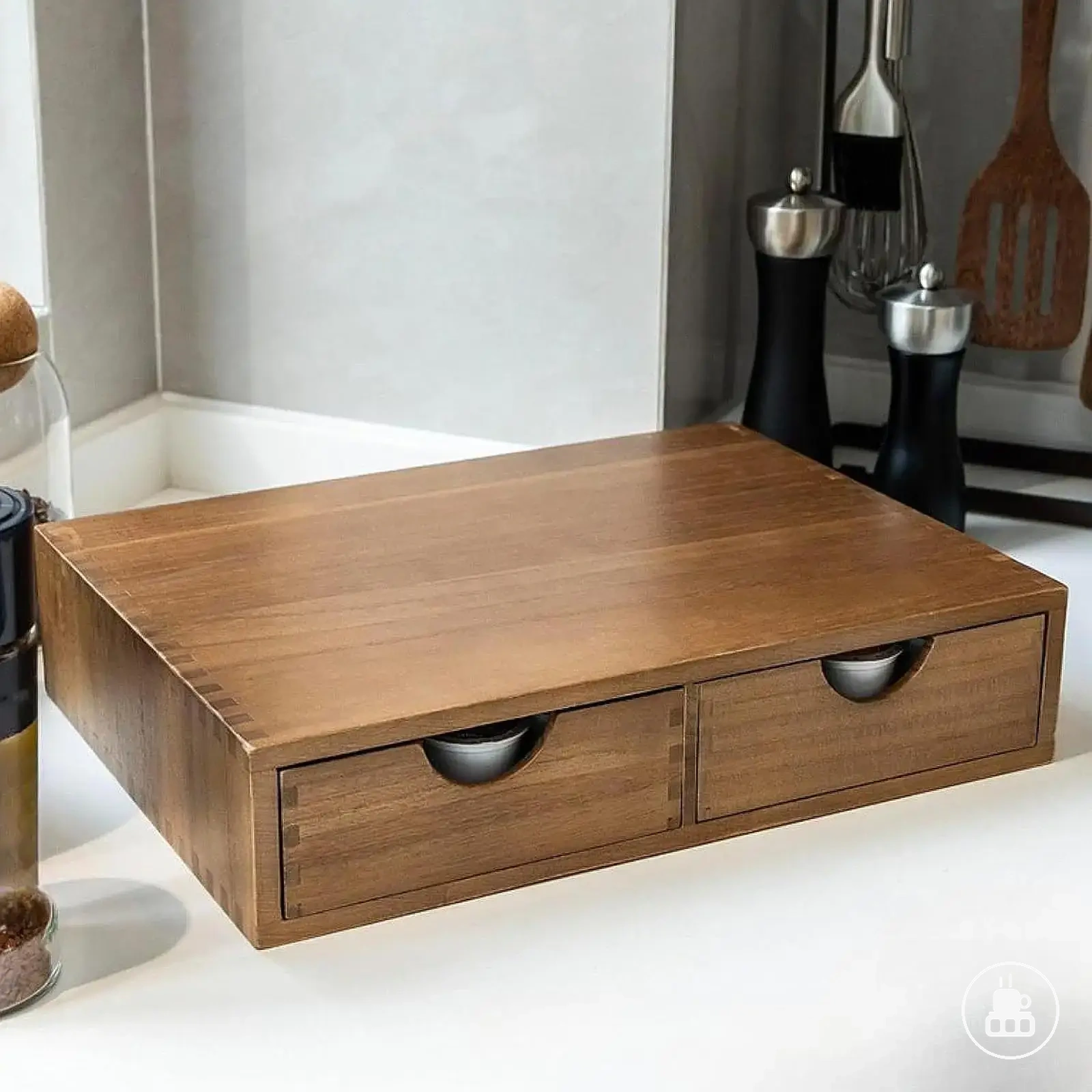

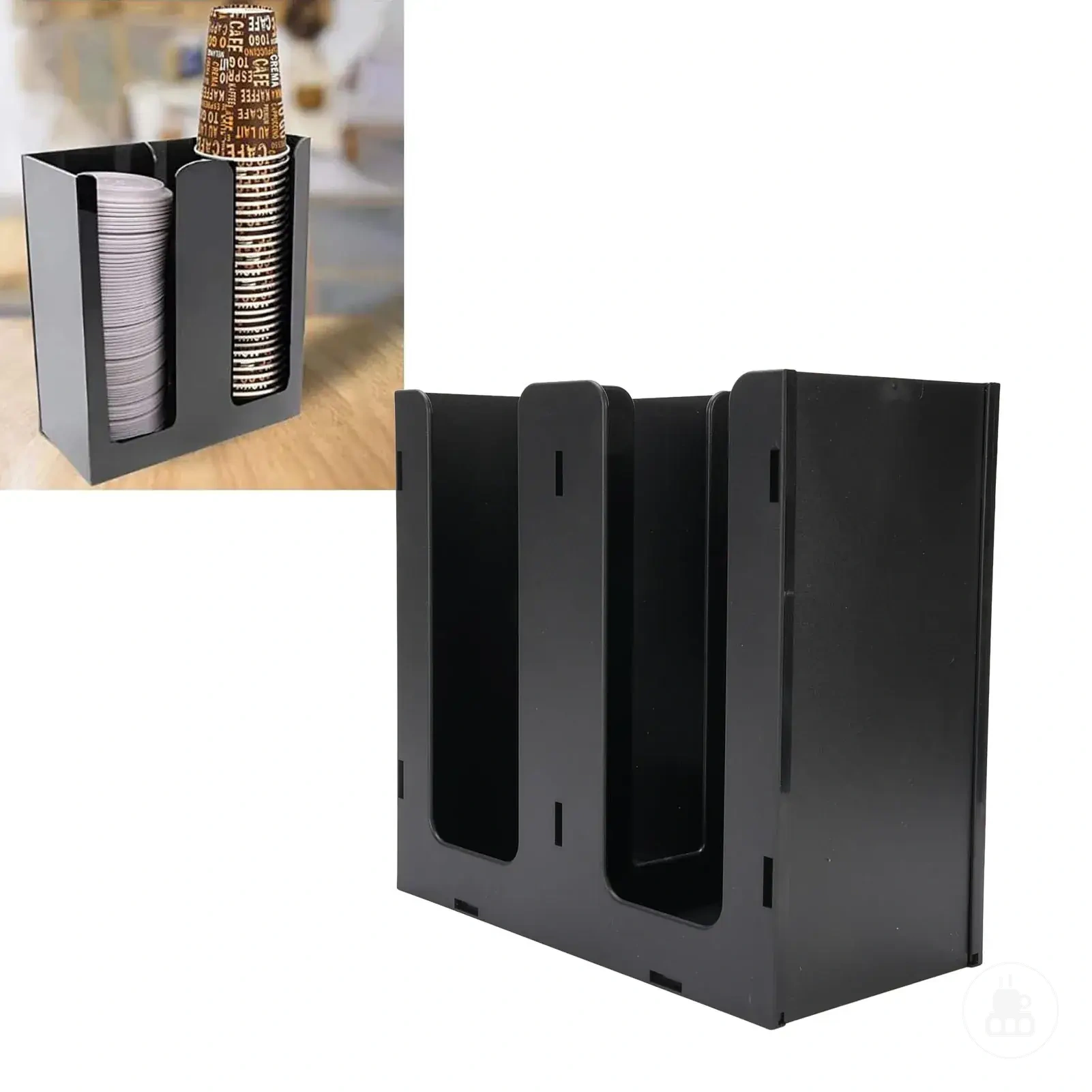
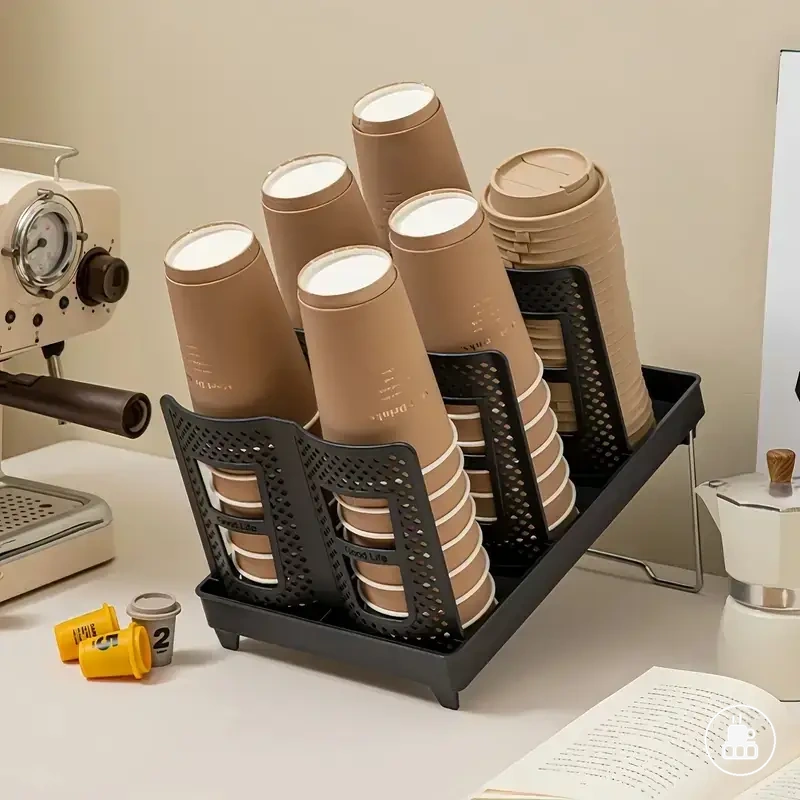

The chart below provides a visual comparison of the priority shift from compact home use to higher-refill shared office or breakroom use.

When pods, cups, and condiments need separate storage zones
Separate storage zones become useful when a single organizer cannot keep the full supply mix accessible and stable. The strongest triggers are conflicting item dimensions, repeated overflow, visibility loss, and shared-use congestion.
| Decision signal | Combined organizer remains suitable when | Separate zones become preferable when |
|---|---|---|
| Item dimensions | Cup, lid, pod, and packet zones coexist without blocking one another | Tall cup stacks compete with shallow pod or packet storage |
| Refill volume | Each zone holds enough supply for the normal period between planned restocks | One category repeatedly overflows or displaces another before the next restock |
| Visibility and reach | High-use items remain visible and can be removed directly | Small items become buried, hidden, or require other supplies to be moved first |
| Shared traffic | Normal use stays orderly without users blocking one another | Multiple users create repeated congestion, spills, or reordering around one storage point |
A combined organizer is still reasonable when these conditions remain controlled. When two or more mismatch signals recur in normal use, separating the conflicting supply groups is usually more reliable than adding more partitions to the same crowded unit.
The existing product examples below illustrate different storage types. Use them only after deciding whether your supply mix is better served by a combined organizer or by separate pod, cup/lid, and condiment zones.
The chart below visualises the main triggers for moving from one combined organizer to separate storage zones.
